



Outcomes of the Meeting on Enhancing Throughput Capacity for Cross Border Freight via the Russia–China Railway Bridge over the Heilongjiang (Amur) River at Tongjiang
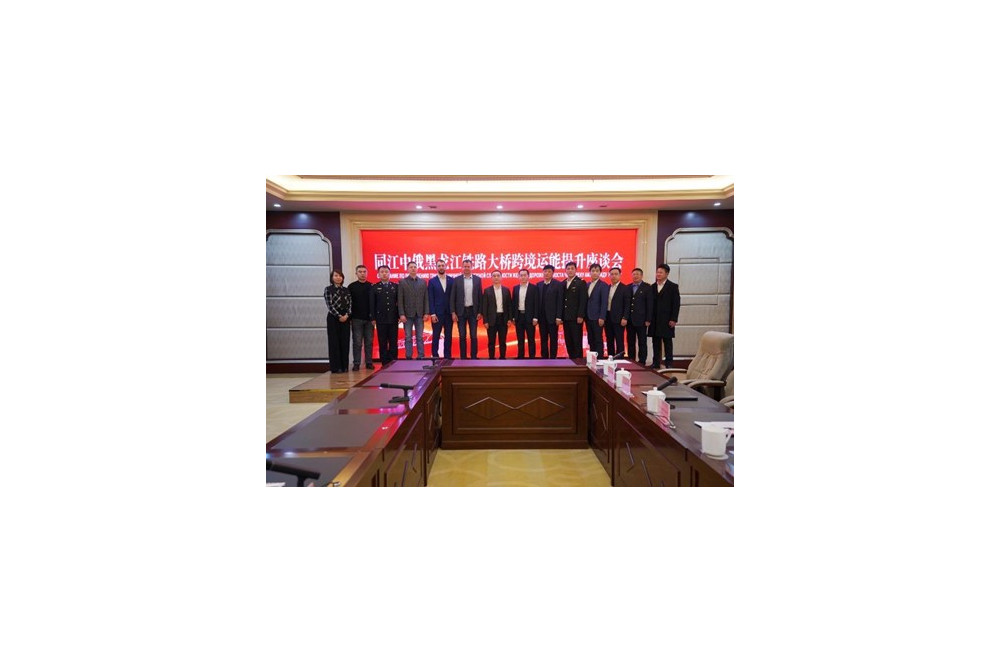
On February 2, 2026, a meeting was held to discuss enhancing throughput capacity for cross‑border freight operations via the Russia—China railway bridge over the Heilongjiang (Amur) River at Tongjiang. The event was attended by representatives of IFR‑1, Tongjiang Mayor Wang Lin, Vice Mayor Wu Chengyue, and delegates from other Russian and Chinese enterprises.
During the session, representatives from both the Russian and Chinese sides engaged in an in‑depth exchange of views and discussions on key issues, including increasing throughput capacity for cross‑border shipments, streamlining and simplifying customs procedures, reducing logistics costs, and expanding the range of goods transported. Actionable measures to advance the work were identified, and a common position was established to promote the development of the border crossing.
Wang Lin noted that since the launch of operations, the first Russia—China railway bridge across the Amur River has demonstrated a steady growth in freight volumes and has provided strong support for trade exchanges between the two countries. The Russian and Chinese parties agreed to unlock the bridge’s transport potential, continuously optimize cross‑border transportation processes, enhance the bridge’s market competitiveness as a transport corridor, and boost enterprises’ interest in using it for cargo shipments.
At the same time, it is essential to actively develop platforms for sustained interaction among freight forwarding, logistics, and trading companies from both countries, to ensure a precise alignment of transport supply with market demand, and to jointly drive Russia—China trade to a higher level of development.
Wang Lin emphasized the need to deepen coordinated cooperation between Russian and Chinese government agencies and businesses, to actively build ties with relevant Russian and Chinese authorities and companies, and to improve mechanisms for regular communication and collaboration.